Talk & Connect: Easy Parent-Child Communication Routines

Talk & Connect: A Practical Parent-Child Communication Workbook for Stronger Family Bonds
Meaningful connection is built through small, repeatable moments: a calm start after school, a curious question at dinner, a repair after conflict, and a consistent way to name feelings. A workbook-style approach turns those moments into simple routines with conversation starters and reflection pages that help parents and kids feel heard, understood, and closer over time.
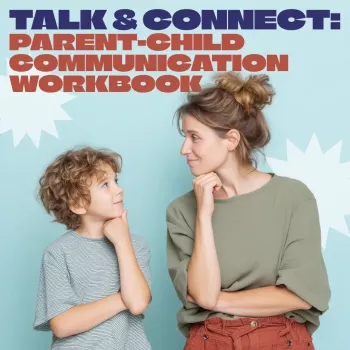
For families who want a supportive, step-by-step structure, Talk & Connect: Parent-Child Communication Workbook offers a practical way to keep conversations going—even on busy days or after tough moments.
What Changes When Communication Becomes a Habit
Communication improves fastest when it’s treated less like a “big talk” and more like a steady rhythm. Over time, small routines can shift the emotional climate at home.
- Fewer power struggles when expectations are discussed before tensions rise
- More cooperation as children feel understood and included
- Better emotional vocabulary that reduces “acting out” as a form of communication
- Stronger trust through consistent follow-through and gentle repair after conflict
- A clearer window into what’s really going on (worries, friendships, school stress)
These outcomes line up with widely recommended positive parenting strategies that emphasize connection, consistency, and calm follow-through, including guidance from the American Academy of Pediatrics.
Common Roadblocks—and What to Try Instead
Even caring families get stuck in familiar loops: short answers, quick meltdowns, shutdowns, or repeated arguments. The goal isn’t perfect communication—it’s having a “next step” that works when things get messy.
- When answers are one-word: switch from “How was your day?” to specific, low-pressure prompts (e.g., “What was the easiest part of today?”)
- When emotions spike fast: pause for regulation first (breathing, a short break, water) before problem-solving
- When kids shut down: offer choices (“Talk now or after dinner?”) and validate feelings without interrogating
- When parents feel triggered: use a reset script (“I’m getting frustrated; I’m going to take a minute so I can listen better.”)
- When conflict repeats: hold a short debrief later focused on patterns, not blame (what happened, what was felt, what to do next time)
For additional research-backed tools on strengthening family relationships and communication, the American Psychological Association provides helpful overviews on parenting and family dynamics.
A Simple Weekly Rhythm That Builds Connection
It’s easier to talk when there’s a predictable container for it. A light structure reduces pressure for both parent and child, especially if your household has busy schedules or strong emotions.
- Daily: 5-minute check-in (one feeling + one highlight + one hope)
- Twice weekly: a longer conversation prompt (10–15 minutes) during a calm activity (walk, car ride, dishes)
- Weekly: a family meeting (15 minutes) to review schedules, solve one problem, and celebrate one win
- After conflict: a repair routine (acknowledge, apologize where needed, agree on one next step)
- Monthly: a “connection audit” to notice what’s working and what needs adjusting
Connection Rhythm: Quick Ideas by Time Available
| Time | What to do | Example prompt |
|---|---|---|
| 2 minutes | Name-and-notice feelings | “What feeling is the biggest one right now?” |
| 5 minutes | High–Low–Hope | “High point, low point, and one thing you’re looking forward to?” |
| 10 minutes | Story swap | “Tell me about a moment you felt proud today.” |
| 15 minutes | Problem-solve together | “What’s one thing we could try differently tomorrow?” |
Conversation Starters That Invite Real Answers
Kids often talk more when the question is specific, the tone is curious, and they don’t feel trapped in a face-to-face “interview.” Try side-by-side moments (snack time, driving, folding laundry) and let pauses be normal.
- Curiosity prompts: “What’s something you wish adults understood about kids?”
- Feelings prompts: “When did you feel brave today?”
- Friendship prompts: “Who made you feel included? Who felt left out?”
- School-life prompts: “If you could change one rule at school, what would it be and why?”
- Family prompts: “What’s one thing that helps you feel close to the family?”
- Future prompts: “What’s a small goal you want help with this week?”
- Repair prompts: “What did you need from me in that moment?”
Using a Workbook Format to Make It Easier (Not Another Task)
If your family also enjoys structured learning activities, you can pair connection routines with skill-building resources like the Critical Thinking & Problem Solving eBook (for collaborative, low-stakes “let’s figure it out together” moments) or Memory Boost Worksheets (for shared practice that can double as calm conversation time).
Talk & Connect Workbook: What It Supports at Home
The value of Talk & Connect: Parent-Child Communication Workbook is its repeatability—families can return to the same basic steps even as kids grow and situations change.
Getting Started in 10 Minutes
When you want extra support for communication plus everyday behavior tools, the CDC Essentials for Parenting also offers practical, age-based strategies that complement a consistent connection routine.
FAQ
What if a child refuses to talk or says “nothing”?
Offer low-pressure choices and switch to specific prompts instead of broad questions. Validate the feeling (“Got it—sounds like you’re not up for talking”) and try side-by-side conversations during an activity, focusing on consistency rather than forcing depth.
How can communication improve after repeated arguments?
Use a repair routine once everyone is calm: name what happened, acknowledge feelings, apologize for tone or words, and agree on one concrete change for next time. Keep it short and specific so it feels doable and repeatable.
Is a communication workbook useful for different ages?
Yes—adapt the format to the child. Younger kids often do best with short prompts, checkboxes, or drawing, while tweens and teens tend to respond to deeper reflection questions when respect and boundaries stay consistent.











Leave a comment